
Inlay, onlay and the materials we use
Inlays
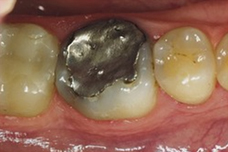
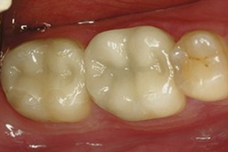
An inlay is used when there is no damage to any of the cusps of your tooth. It is essentially placed within these cusps, in the remaining healthy portion of the tooth, where it helps increase the tooth's strength without covering any cusp.
Onlays
An onlay is used when there is slightly more extensive damage to the tooth structure. This type of restoration is placed over at least one of the cusps on the tooth, rather than within them. Like an inlay, it is a partial crown: it is used when there is still a healthy enamel portion of the tooth, and it helps increase the tooth's strength.
Porcelain, gold or composite
Your inlay or onlay is usually crafted out of porcelain or gold, but it can also be made of a composite material. We will make the determination as to which restoration will work best in your specific situation, and we make every effort to ensure that the new restoration feels exactly like one of your natural teeth.
Your 2 to 3 appointments
Removing the decay
When we have decided to go ahead with an inlay or onlay, we set aside 2 to 3 appointments for the entire process. The majority are completed in two visits, but there is sometimes a need for a third to ensure a proper fit. The procedure begins with the removal of all decay in the tooth.
An impression for our lab
Once we have removed the decay, we take an impression of the tooth. This impression is sent to our lab, where your new restoration is crafted in the material that will work best for your tooth: porcelain, gold or composite.
A temporary in between
While your new restoration is created, we provide you with a temporary restoration. Our temporary restorations resemble your natural teeth, so you can continue with your daily life without worrying about a missing or incompatible tooth.
Fitting and cementing
During your second visit, we place your final restoration. The inlay or onlay is fitted comfortably into the mouth, and the final step is to cement it into place, leaving you with a beautifully restored smile.